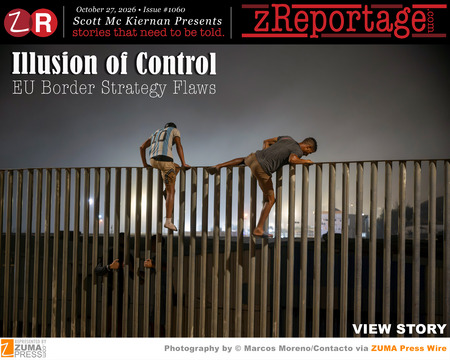
Published: TUESDAY October 27, 2026: 'Illusion of Control: EU Border Strategy Flaws' by ZUMA Press partner agency Contacto photographer in Ceuta Marcos Moreno: Spain has initiated its first formal deportations from the North African enclave of Ceuta since July's historic mass border crossing, returning 16 migrants to Morocco. When the Spanish monarchy wrapped up its historic visit to Ceuta on October 14, 2026, the newly cleared beaches left behind an illusion of control. Two weeks later, the enclave has shifted to aggressive enforcement, with Spain initiating its first wave of fast-tracked deportations ahead of the November 29 elections. While human rights groups condemn the expulsions as violations of international safeguards, the underlying crisis remains completely unresolved: roughly 8,000 migrants--including nearly 3,500 unaccompanied minors--remain trapped in a tiny legal limbo, sleeping rough in local woodlands. For Europe, Ceuta is a flashpoint that exposes the unsustainable future of its broader migration strategy. Welcome to 'Illusion of Control: EU Border Strategy Flaws'
© zReportage.com Issue #1060 Story of the Week: Published: TUESDAY October 27, 2026: 'Illusion of Control: EU Border Strategy Flaws' by ZUMA Press partner agency Contacto photographer in Ceuta Marcos Moreno: Spain has initiated its first formal deportations from the North African enclave of Ceuta since July's historic mass border crossing, returning 16 migrants to Morocco. When the Spanish monarchy wrapped up its historic visit to Ceuta on October 14, 2026, the newly cleared beaches left behind an illusion of control. Two weeks later, the enclave has shifted to aggressive enforcement, with Spain initiating its first wave of fast-tracked deportations ahead of the November 29 elections. While human rights groups condemn the expulsions as violations of international safeguards, the underlying crisis remains completely unresolved: roughly 8,000 migrants--including nearly 3,500 unaccompanied minors--remain trapped in a tiny legal limbo, sleeping rough in local woodlands. For Europe, Ceuta is a flashpoint that exposes the unsustainable future of its broader migration strategy. Welcome to 'Illusion of Control: EU Border Strategy Flaws'
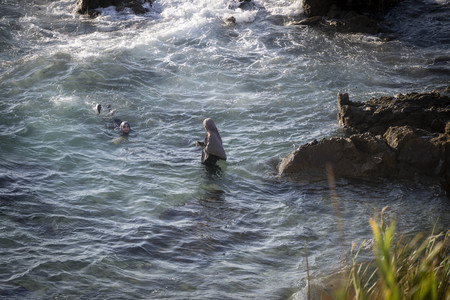
A migrant prepares to bathe in the Mediterranean sea at El Trampolin beach in Ceuta, Spain. Despite having been cleared, the camp on El Trampolin beach resembles a makeshift town and remains occupied by migrants who continue to arrive ilegally from Morocco.
© Marcos Moreno/Contacto via ZUMA Press

Two women swim ashore in Ceuta, crossing illegally from Morocco. The Ministry of Defense has authorized more than a hundred military personnel from the Canary Islands to be deployed to Ceuta to bolster the Army's capabilities, in response to the migration crisis.
© Marcos Moreno/Contacto via ZUMA Press
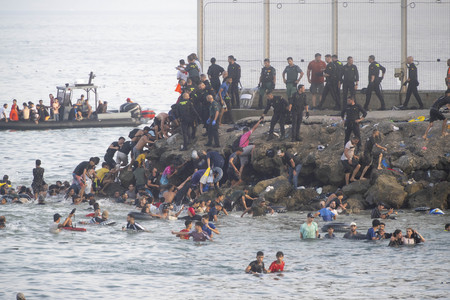
Dozens of migrants are assisted ashore having crossed the border between Ceuta and Morocco. From early in the morning, thousands of migrants had entered the autonomous city by swimming and also on foot, skirting the breakwater that separates the autonomous city from Morocco. Revised official figures under investigation confirm that at least 72,000 to 80,000 migrants crossed over a 48-hour period, resulting in at least 82 confirmed deaths on the Spanish side and 14 in Morocco.
© Marcos Moreno/Contacto via ZUMA Press
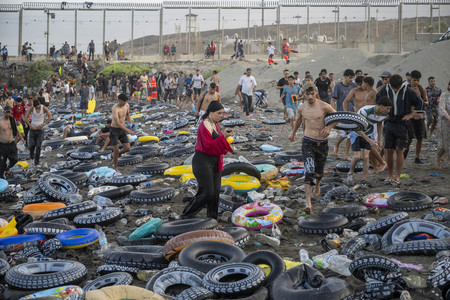
Boat people and migrants walk among hundreds of inner tubes on the beach after crossing the border between Morocco and Ceuta in Spain on July 30, 2026. From early in the morning, thousands of migrants had entered the autonomous city illegally.
© Marcos Moreno/Contacto via ZUMA Press
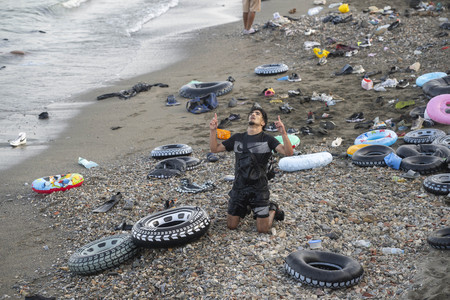
A migrant prays after swimming across the border from Morocco to Ceuta, Spain. Countless people continued to enter Ceuta from Morocco in an uncontrolled manner as night fell. The bodies of 16 people have been recovered from the water in the last 24 hours, bringing the total number of dead whilst attempting to swim across from Morocco this year to 47.
© Marcos Moreno/Contacto via ZUMA Press
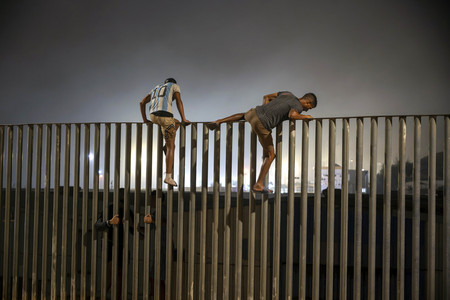
Migrants scale the fence from Morocco, and enter the Spanish enclave of Ceuta illegally. Countless people continued to enter from Morocco in an uncontrolled manner as night fell. At least 72,000 to 80,000 migrants crossed over a 48-hour period, resulting in at least 82 confirmed deaths on the Spanish side and 14 in Morocco.
© Marcos Moreno/Contacto via ZUMA Press
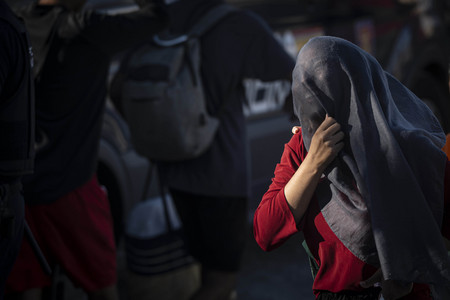
A migrant woman covers her face with a shawl as a large group of migrants shelter on Trampoline beach in Ceuta, Spain. Ceuta continues to face a serious humanitarian crisis following the historic mass influx of more than 70,000 migrants who swam across the Tarajal on 30 and 31 July. The autonomous city continues to face a serious humanitarian and security crisis.
© Marcos Moreno/Contacto via ZUMA Press
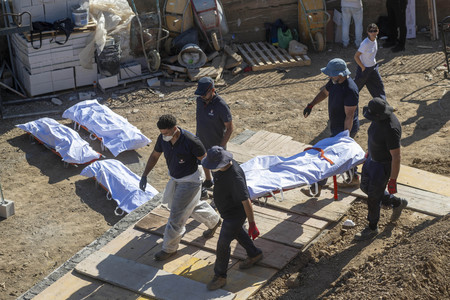
Preparations for burial of several migrants who died while making the illegal crossing to the Spanish enclave at the Muslim cemetery in Ceuta. Revised official figures under investigation confirm that at least 72,000 to 80,000 migrants crossed over a 48-hour period, resulting in at least 82 confirmed deaths on the Spanish side and 14 in Morocco.
© Marcos Moreno/Contacto via ZUMA Press
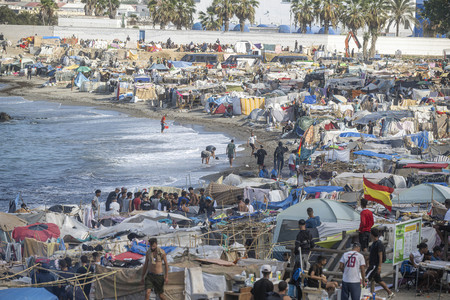
Migrants who arrived illegally from Morocco shelter in shacks covering Trampolin beach in Ceuta. More than 2,000 migrants have returned to the settlements on Ceuta's Trampolin and Benitez beaches after the temporary reception centre set up in the city's port reached full capacity.
© Marcos Moreno/Contacto via ZUMA Press
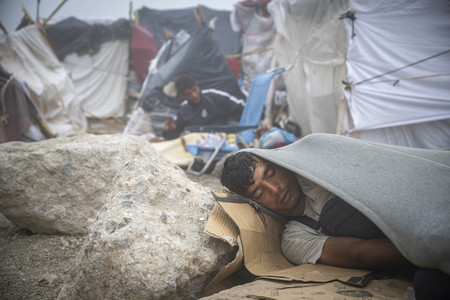
A migrant sleeps on rocks at the settlement on El Trampolin beach, on 30 September 2026, in Ceuta. Hundreds of migrants continue to live on the Spanish enclave's beaches following the postponement of the eviction from the settlement.
© Marcos Moreno/Contacto via ZUMA Press
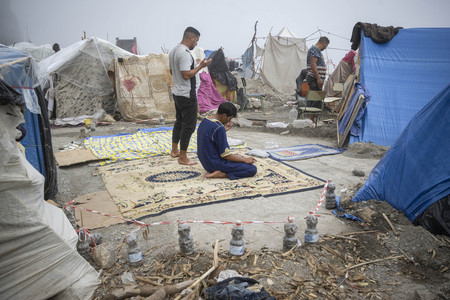
Muslim migrants face Mecca and pray at the settlement on El Trampolin beach in Ceuta. Hundreds of migrants continue to live on the beach following the postponement of the settlement's clearance.
© Marcos Moreno/Contacto via ZUMA Press
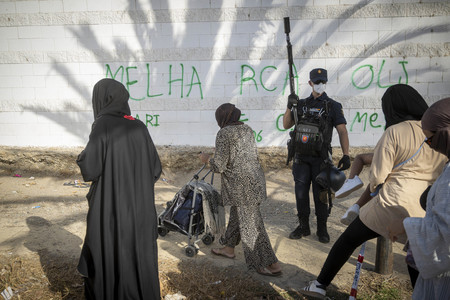
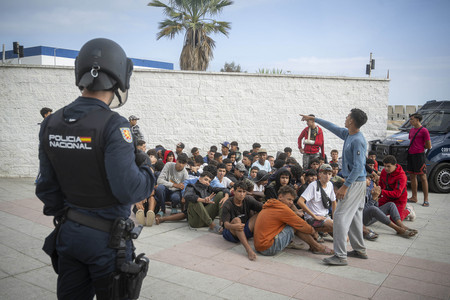
A National Police officer checks migrants on Trampolin beach in Ceuta. More than 2,000 migrants have returned to the settlements on Ceuta's beaches after the temporary reception centre set up in the city's port reached full capacity.
© Marcos Moreno/Contacto via ZUMA Press
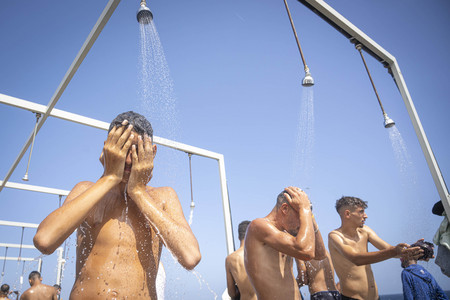
Migrants bathe in the public showers on Trampolin beach in Ceuta. More than 2,000 migrants have returned to the settlements on Ceuta's beaches after the temporary reception centre set up in the city's port reached full capacity.
© Marcos Moreno/Contacto via ZUMA Press
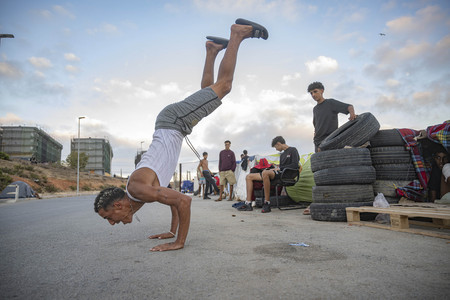
Several migrants at the Tarajal border exercise for entertainment in Ceuta. The Spanish Government has stepped up security measures at Ceuta's border with Morocco in light of the possibility of attempts to enter the country illegally.
© Marcos Moreno/Contacto via ZUMA Press
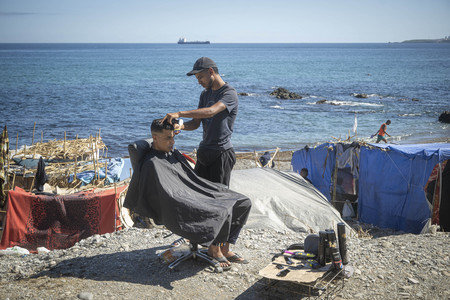
A migrant cuts another's hair at his makeshift salon on Trampolin Beach in Ceuta. National and local police have once again been deployed to Trampolin Beach as part of a second operation against street vending. The migrants set up an illegal market again after the authorities had arrived during the night to ask them to take down their stalls.
© Marcos Moreno/Contacto via ZUMA Press
Several migrants warm themselves around a camp fire on Benitez beach in Ceuta. The enclave continues to face a serious humanitarian crisis following the unprecedented mass arrival of more than 70,000 migrants who swam across the Tarajal strait from Morocco on 30 and 31 July.
© Marcos Moreno/Contacto via ZUMA Press

The police evict migrants from Benitez Beach in Ceuta. Dozens of Moroccan migrants who had been staying in the settlements on the Beach have decided to return voluntarily to Morocco, after being informed that they are eligible for this option.
© Marcos Moreno/Contacto via ZUMA Press
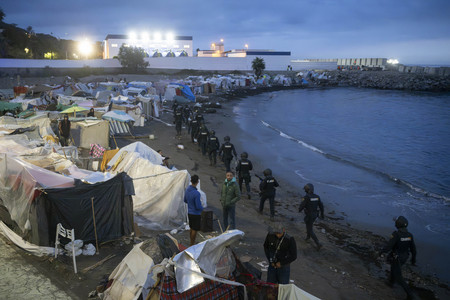
Spanish police evict migrants from Benitez Beach in Ceuta. Dozens of Moroccan migrants who had been staying in the settlements in Ceuta have decided to return voluntarily to Morocco, after being informed that this option was available to them.
© Marcos Moreno/Contacto via ZUMA Press
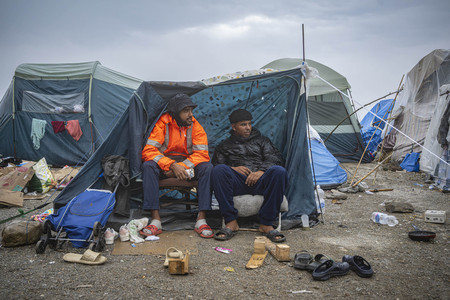
Two migrants watch from a tent shelter as Spanish National Police officers intervene during the evacuation of a group of migrants gathered on El Trampolin beach in Ceuta. Buses full of migrants removed from El Trampolin beach towards the Tarajal border area to return to Morocco.
© Marcos Moreno/Contacto via ZUMA Press
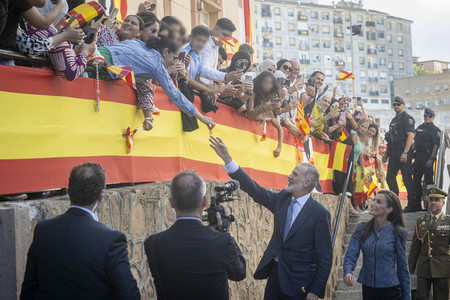
KING FELIPE VI and QUEEN LETIZIA greet residents during a visit to the Vicente Aleixandre Nursery and Primary School in Ceuta. The King and Queen are visiting Ceuta to show their solidarity with and support for the people of Ceuta, just months after the mass influx of more than 80,000 migrants from Morocco.
© Marcos Moreno/Contacto via ZUMA Press
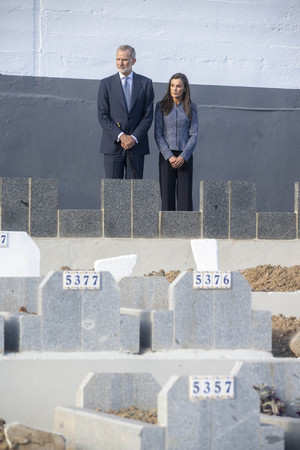
KING FELIPE VI and QUEEN LETIZIA during the memorial service in memory of those migrants who died at sea on 30 and 31 July, held at the Sidi Embarek Cemetery in Ceuta. The Spanish royals are visiting Ceuta for the first time since Felipe VI's accession to the throne to show their solidarity and support for the people, just months after the mass influx of more than 80,000 migrants from Morocco, at a time when the situation has still not fully returned to normal.
© Marcos Moreno/Contacto via ZUMA Press