Published: TUESDAY October 20, 2026: 'Silencing The Guns: Ukraine Peace Blueprint' by ZUMA Press partner agency Ukrinform photographer in Ukraine Dmytro Smolienko: High-stakes U.S. diplomacy has brought Russia and Ukraine closer than ever to a potential ceasefire, raising fragile hopes for an end to the fighting just as a grueling winter sets in. Following intense trilateral mediation, Russian President Putin and Ukrainian President Zelensky have agreed in principle to resume formal peace talks next month in Abu Dhabi. While negotiators report that 95 percent of the structural framework is aligned, including innovative post-war security guarantees for Kyiv and Russian financial contributions toward reconstruction, a critical 10 percent chasm remains over territorial sovereignty in the Donbas region. For a war-weary Ukrainian public facing continued strikes on energy infrastructure, the upcoming summit represents a monumental yet precarious pivot toward silencing the guns, though deep skepticism persists over whether any final treaty can deliver a lasting and equitable peace. Welcome to 'Silencing The Guns: Ukraine Peace Blueprint'
© zReportage.com Issue #1059 Story of the Week: Published: TUESDAY October 20, 2026: 'Silencing The Guns: Ukraine Peace Blueprint' by ZUMA Press partner agency Ukrinform photographer in Ukraine Dmytro Smolienko: High-stakes U.S. diplomacy has brought Russia and Ukraine closer than ever to a potential ceasefire, raising fragile hopes for an end to the fighting just as a grueling winter sets in. Following intense trilateral mediation, Russian President Putin and Ukrainian President Zelensky have agreed in principle to resume formal peace talks next month in Abu Dhabi. While negotiators report that 95 percent of the structural framework is aligned, including innovative post-war security guarantees for Kyiv and Russian financial contributions toward reconstruction, a critical 10 percent chasm remains over territorial sovereignty in the Donbas region. For a war-weary Ukrainian public facing continued strikes on energy infrastructure, the upcoming summit represents a monumental yet precarious pivot toward silencing the guns, though deep skepticism persists over whether any final treaty can deliver a lasting and equitable peace. Welcome to 'Silencing The Guns: Ukraine Peace Blueprint'
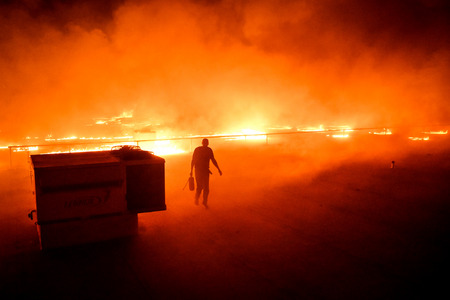
Surrounded by flames, a man uses a fire extinguisher to help rescuers combat a fire on the roof of the Amstor shopping centre in the Pivdennyi district, Zaporizhzhia, following a drone attack. Russia continues to target the city's commercial infrastructure.
© Dmytro Smolienko/Ukrinform via ZUMA Press Wire
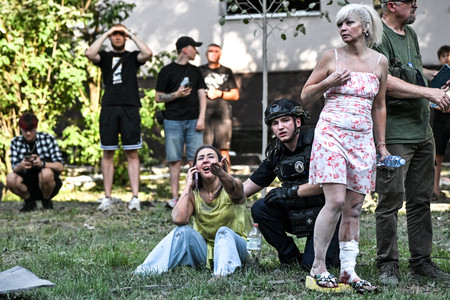
KATERYNA, a resident who survived after a Russian guided aerial bomb struck a five-story residential building, reacts and talks on the phone as the search continues for her 11-year-old daughter beneath the rubble in Zaporizhzhia. 79 apartment blocks and more than 30 private houses were damaged. Three people were killed, an 11-year-old child and two women aged 71 and 72. Several children were among the 41 injured.
© Dmytro Smolienko/Ukrinform via ZUMA Press Wire
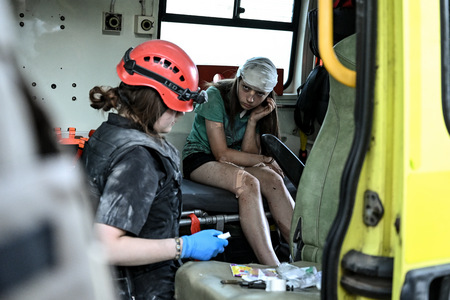
A medic administers first aid to a girl with a bandaged head wounded in a Russian guided aerial bomb attack in Zaporizhzhia. Russian forces launched two rounds of attacks directly targeting residential quarters, 79 apartment blocks and more than 30 private houses were damaged. Three people were killed, an 11-year-old child and two women aged 71 and 72. Several children were among the 41 injured.
© Dmytro Smolienko/Ukrinform via ZUMA Press Wire
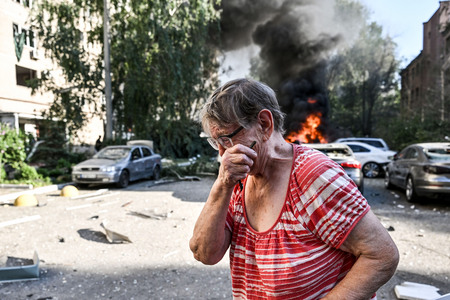
An elderly woman cries near burning cars in the courtyard of an apartment block struck by a Russian guided bomb in Zaporizhzhia. Russian forces carried out a massive attack on the southeastern Ukrainian city with guided aerial bombs, striking civilian infrastructure and residential areas. A 71-year-old woman was killed, and the total number of wounded rose to 31.
© Dmytro Smolienko/Ukrinform via ZUMA Press Wire
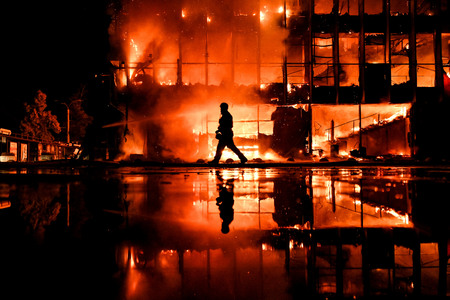
Rescuers extinguish a fire at the Intrade shopping centre in Zaporizhzhia, which broke out following a Russian drone attack during the night. Russian forces struck the southeastern city with strike UAVs and an FPV drone. The attack destroyed the shopping centre and damaged a university building as well as multi-story residential blocks.
© Dmytro Smolienko/Ukrinform via ZUMA Press Wire
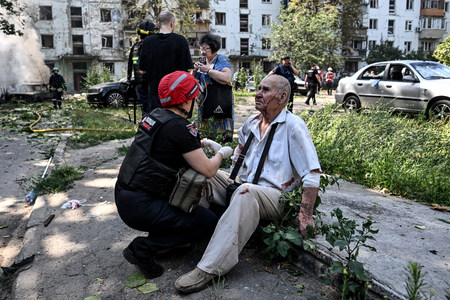
A police paramedic administers first aid to an elderly man injured by a Russian air strike in Zaporizhzhia. Russian forces attacked civilian infrastructure in the regional capital with guided aerial bombs. Apartment blocks and private houses were damaged, and cars were wrecked. At least 24 people were injured, including children.
© Dmytro Smolienko/Ukrinform via ZUMA Press Wire
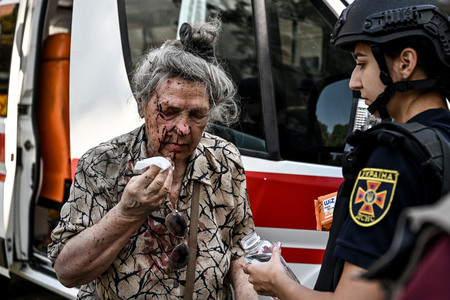
A State Emergency Service psychologist attends to an elderly woman injured by a Russian air strike on Zaporizhzhia. Russian forces attacked civilian infrastructure in the regional capital district with guided aerial bombs. Apartment blocks and private houses were damaged, and cars were wrecked. At least 24 people were injured, including children.
© Dmytro Smolienko/Ukrinform via ZUMA Press Wire
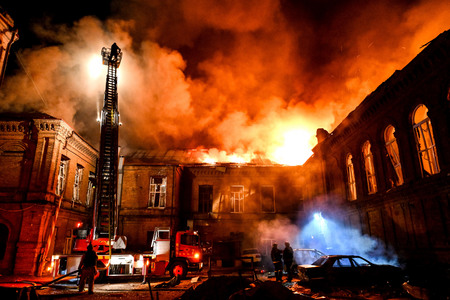
A rescuer uses an aerial platform to extinguish a fire at Academic Building No. 3 of Zaporizhzhia National University following an overnight Russian drone attack. The historic building, formerly the Oleksandrivsk Girls' Gymnasium, built in 1902, suffered extensive fire damage. Two other university buildings were damaged, a shopping centre was destroyed, and residential buildings sustained damage.
© Dmytro Smolienko/Ukrinform via ZUMA Press Wire
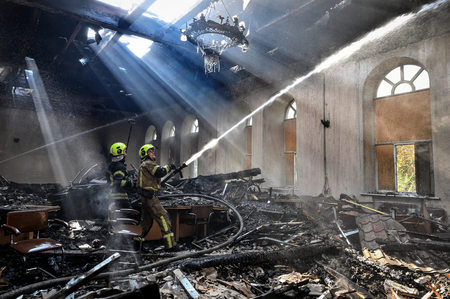
Rescuers extinguish smoldering hotspots in the fire gutted Academic Building No. 3 of Zaporizhzhia National University following a Russian drone attack. The historic building, formerly the Oleksandrivsk Girls' Gymnasium, built in 1902, suffered extensive fire damage. Two other university buildings and residential blocks were damaged, a shopping centre was destroyed.
© Dmytro Smolienko/Ukrinform via ZUMA Press Wire
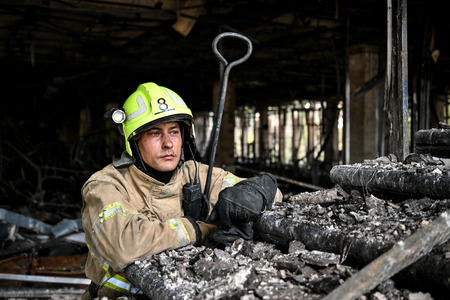
A State Emergency Service rescuer takes a moment while dousing hotspots during a response effort in the Intrade shopping centre in Zaporizhzhia, which burned down following a Russian drone attack. Overnight, Russian forces struck the city with strike UAVs and an FPV drone, destroying a shopping centre, damaged a university building and multi-story residential blocks.
© Dmytro Smolienko/Ukrinform via ZUMA Press Wire
WARNING: SENSITIVE CONTENT. Paramedics cover the body of a person who died beneath the rubble of a private residential house destroyed by a Russian drone, in Zaporizhzhia. Four people were inside the house at the time of the attack. Two women were killed in the direct hit and subsequent structural collapse, while two other residents, a 45-year-old man and a child, were injured
© Dmytro Smolienko/Ukrinform via ZUMA Press Wire
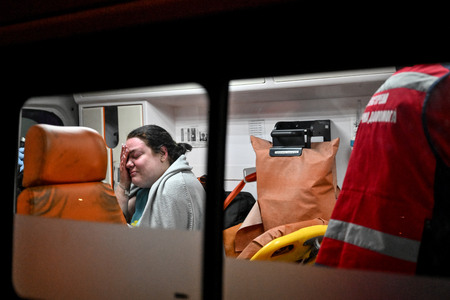
A woman who suffered burns in a Russian strike on a nine-story residential building receives medical treatment in an ambulance in the Kosmichnyi district of Zaporizhzhia. Five people were injured in the attack, one of them seriously. Rescuers evacuated three people who had been trapped on the upper floors.
© Dmytro Smolienko/Ukrinform via ZUMA Press Wire
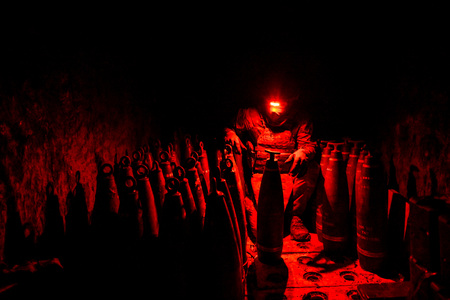
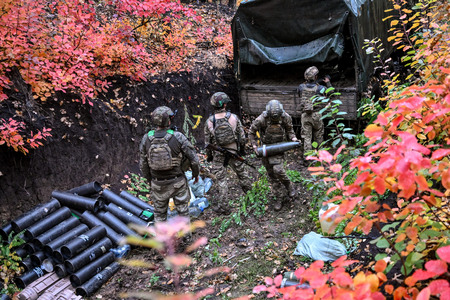
Under the eery red glow from a head torch, an artillery crew member from the Rifle Battalion of the Zaporizhzhia Police prepares shells for a 155-mm Bosnian M94 howitzer in a dugout during a frontline combat mission in the Donetsk region.
© Dmytro Smolienko/Ukrinform via ZUMA Press Wire
Artillery crew members from the Rifle Battalion of the Zaporizhzhia Police install fuzes on 155mm artillery shells for a Bosnian M94 howitzer during a combat mission on the frontlines with Russia in the Donetsk region.
© Dmytro Smolienko/Ukrinform via ZUMA Press Wire
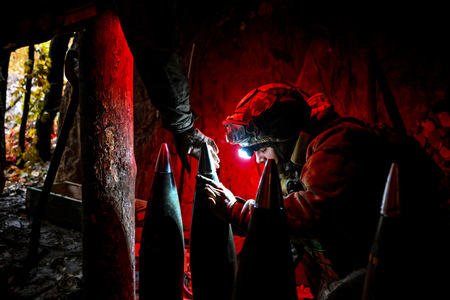
Amid colorful fall foliage, artillery crew members from the Rifle Battalion of the Zaporizhzhia Police load shells for a 155mm Bosnian M94 howitzer at the frontline positions of the unit in the Donetsk region.
© Dmytro Smolienko/Ukrinform via ZUMA Press Wire
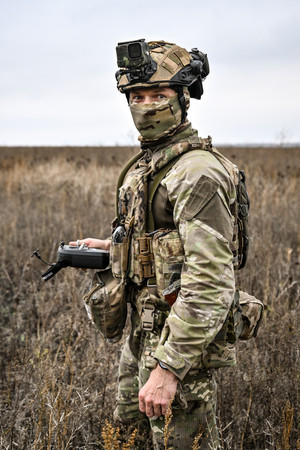
A soldier from a task force rifle battalion of the National Police of Ukraine holding a UAV remote controller stands in the field. The GARA drone is a Ukrainian fixed-wing unmanned aerial vehicle with vertical take-off and landing (VTOL) capability, used for aerial reconnaissance and as a strike UAV.
© Dmytro Smolienko/Ukrinform via ZUMA Press Wire
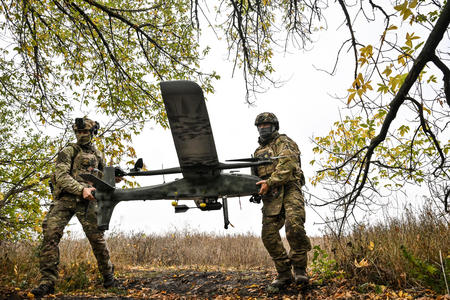
Soldiers from a task force rifle battalion of the Zaporizhzhia Police of Ukraine carry a GARA UAV to a shelter in the Donetsk region. The GARA drone is a Ukrainian fixed-wing unmanned aerial vehicle with vertical take-off and landing (VTOL) capability, equipped with artificial intelligence features. It is used for aerial reconnaissance, fire adjustment, and as a strike UAV.
© Dmytro Smolienko/Ukrinform via ZUMA Press Wire
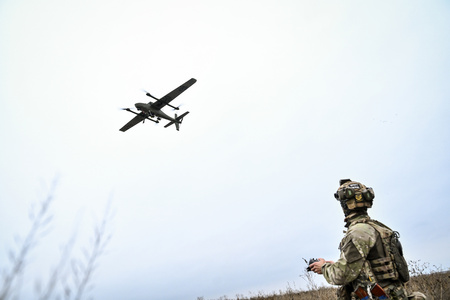
A soldier from a task force rifle battalion of the Zaporizhzhia Police of Ukraine operates a GARA UAV via remote controller during a combat mission in the Donetsk region. The GARA drone is a Ukrainian fixed-wing unmanned aerial vehicle with vertical take-off and landing (VTOL) capability, equipped with artificial intelligence features. It is used for aerial reconnaissance, fire adjustment, and as a strike UAV.
© Dmytro Smolienko/Ukrinform via ZUMA Press Wire
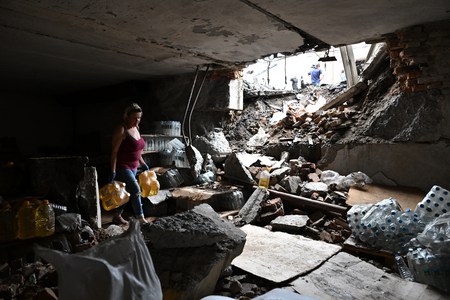
A woman salvages goods from a warehouse at the central market, badly damaged by a Russian attack in Zaporizhzhia. Overnight, the Russian army struck the south-eastern Ukrainian city with drones, destroying a hostel, a shopping centre, and the central market.
© Dmytro Smolienko/Ukrinform via ZUMA Press Wire
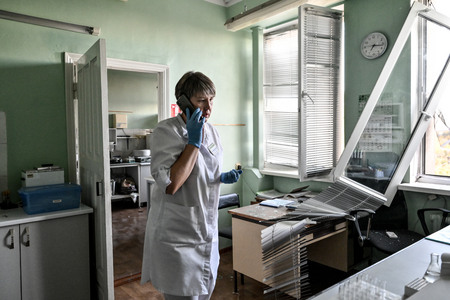
A healthcare provider talks on the phone in the room damaged by a Russian strike on a medical centre in Zaporizhzhia. Drones attacked the southeastern city, injuring one person and setting fire to the medical centre.
© Dmytro Smolienko/Ukrinform via ZUMA Press Wire
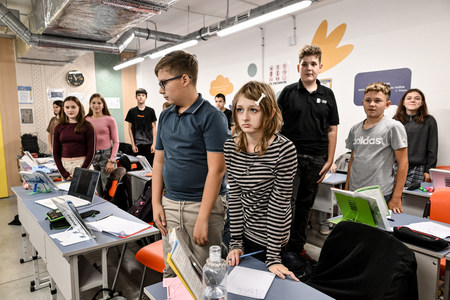
Students stand by their desks in the classroom at the Zaporizhzhia's first underground school at Gymnasium No. 88. The gymnasium became the first academic institution in the southeastern Ukrainian city to open a fully functional underground school. More than 557 children study here.
© Dmytro Smolienko/Ukrinform via ZUMA Press Wire
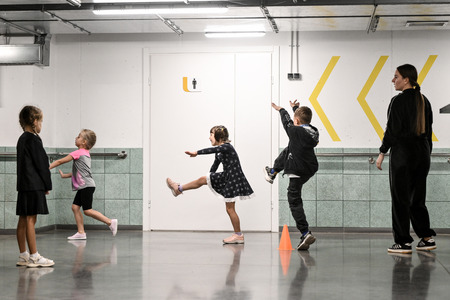
A childrens physical education teacher holds a lesson at the city's first underground school at Gymnasium No. 88 in Zaporizhzhia. The gymnasium became the first academic institution in the southeastern Ukrainian city to open a fully functional underground school. More than 557 children study here.
© Dmytro Smolienko/Ukrinform via ZUMA Press Wire
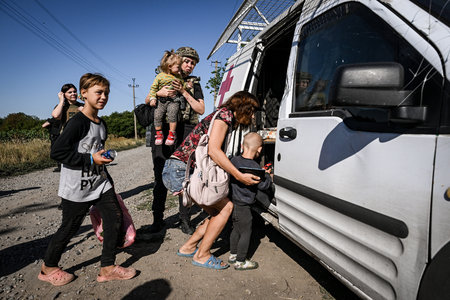
A mother and her children get into a van during an evacuation carried out by law enforcement officers and volunteers from front-line Novoivanivka, Zaporizhzhia region. The settlements in the southeastern Ukrainian region are subjected to daily Russian bombardments.
© Dmytro Smolienko/Ukrinform via ZUMA Press Wire
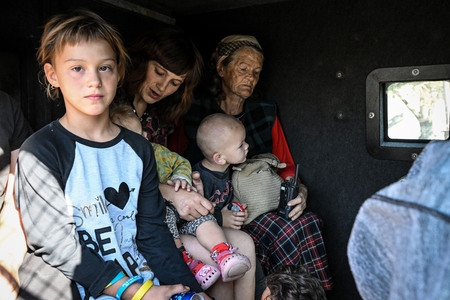
Women and children sit in an evacuation van as Police and chaplains evacuated nine people, including two families from settlements in the southeastern Zaporizhzhia region. The area is subjected to daily Russian bombardments.
© Dmytro Smolienko/Ukrinform via ZUMA Press Wire