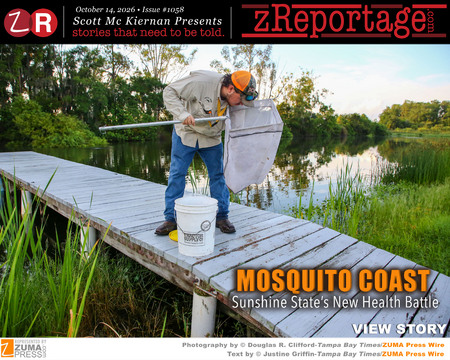
Published TUESDAY October 14, 2026: 'MOSQUITO COAST: Sunshine State's New Health Battle' Photography by ZUMA Partner newspaper The Tampa Bay Times Pulitzer Prize winning photo-journalist Douglas R. Clifford: Three Florida counties near Tampa Bay have declared local states of emergency over an unprecedented surge of locally acquired dengue fever. Its largest locally acquired dengue fever outbreak in decades, with over 250 cases so far in 2026, marking the highest calendar year count for any U.S. state since at least the 1940s. The death of Gay Small of Tampa earlier this month was the first attributed to the disease in nearly 100 years. The emergency declarations will allow crews to enter private property to remove standing water. Most local cases involve the DENV-2 serotype traced to imported infections from Cuba, where fuel shortages have hindered mosquito control. Welcome to 'MOSQUITO COAST: Sunshine State's New Health Battle'
© zReportage.com Issue #1058 Story of the Week: Published TUESDAY October 14, 2026: 'MOSQUITO COAST: Sunshine State's New Health Battle' Photography by ZUMA Partner newspaper The Tampa Bay Times Pulitzer Prize winning photo-journalist Douglas R. Clifford: Three Florida counties near Tampa Bay have declared local states of emergency over an unprecedented surge of locally acquired dengue fever. Its largest locally acquired dengue fever outbreak in decades, with over 250 cases so far in 2026, marking the highest calendar year count for any U.S. state since at least the 1940s. The death of Gay Small of Tampa earlier this month was the first attributed to the disease in nearly 100 years. The emergency declarations will allow crews to enter private property to remove standing water. Most local cases involve the DENV-2 serotype traced to imported infections from Cuba, where fuel shortages have hindered mosquito control. Welcome to 'MOSQUITO COAST: Sunshine State's New Health Battle'
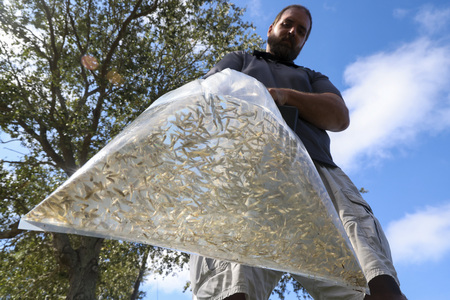
DAN BARTER, of Silver Springs, holds a bag containing 2,000 mosquitofish while transporting them to Prospect Lake in downtown Clearwater. The release is part of a city effort to stock four local lakes with 10,000 mosquitofish to help control mosquitoes amid rising regional cases of dengue fever. The fish, also known as Gambusia, reproduce quickly and naturally feed on mosquito larvae.
© Douglas R. Clifford/Tampa Bay Times via ZUMA Press Wire
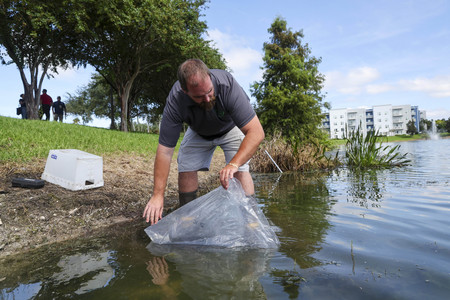
DAN BARTER, of Silver Springs, releases 2,000 mosquitofish into Prospect Lake in downtown Clearwater. The release is part of a city effort to stock four local lakes with 10,000 mosquitofish to help control mosquitoes amid rising regional cases of dengue fever. The fish, also known as Gambusia, reproduce quickly and naturally feed on mosquito larvae.
© Douglas R. Clifford/Tampa Bay Times via ZUMA Press Wire
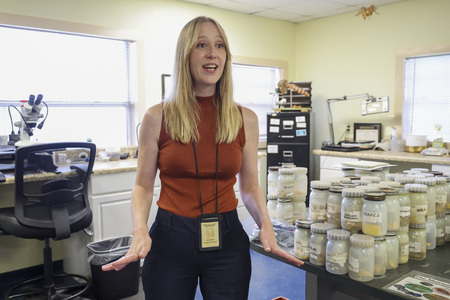
ALISSA BERRO, director of mosquito control and vegetation management, discusses the Aedes aegypti and Aedes albopictus, two mosquito species that can transmit dengue viruses, at the mosquito control laboratory in St. Petersburg, Florida.
© Douglas R. Clifford/Tampa Bay Times via ZUMA Press Wire
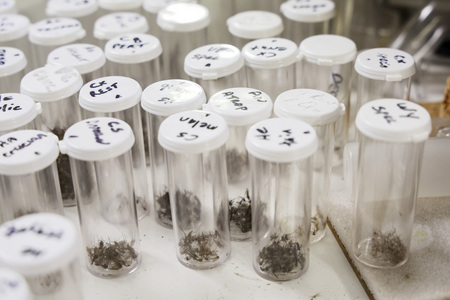
Collected samples of mosquito species are catalogued and stored at the mosquito control laboratory in St. Petersburg, Florida.
© Douglas R. Clifford/Tampa Bay Times via ZUMA Press Wire
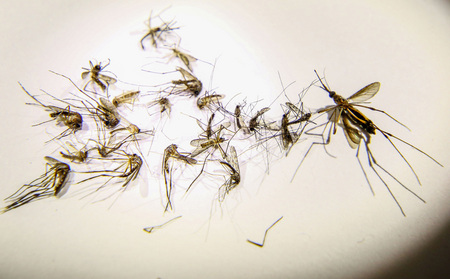
A collection of mosquitos captured in Pasco County by a suction trap are sorted by species at the Entomology Lab at Pasco County Mosquito Control facility in Odessa, Florida.
© Douglas R. Clifford/Tampa Bay Times via ZUMA Press Wire
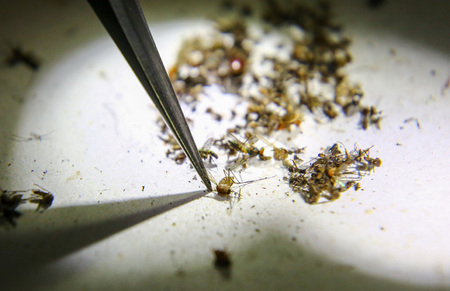
MARY BOLTON, an entomology assistant trainee, sorts dead mosquitoes on a sorting grid using tweezers for precise identification, classification, and data recording at Pinellas County Mosquito Control in Clearwater.
© Douglas R. Clifford/Tampa Bay Times via ZUMA Press Wire
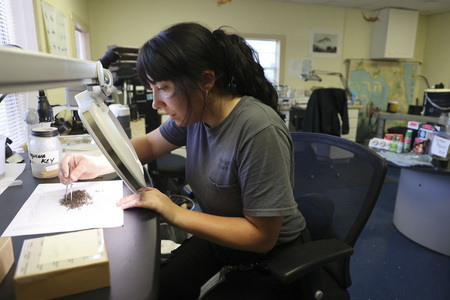
Biologist Kayla Godfrey sorts mosquitos by species captured in Pasco County by a suction trap at the Entomology Lab at Pasco County Mosquito Control facility in Odessa, Florida.
© Douglas R. Clifford/Tampa Bay Times via ZUMA Press Wire
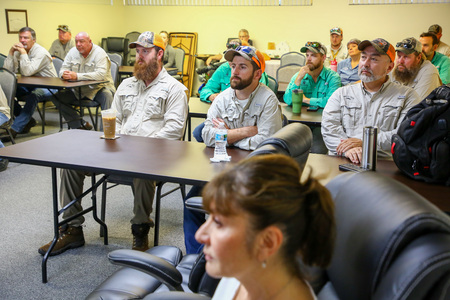
Mosquito technicians attend a morning meeting at Pasco County Mosquito Control facility in Odessa, where they discuss weather and mosquito treatment plans and share surveillance counts.
© Douglas R. Clifford/Tampa Bay Times via ZUMA Press Wire
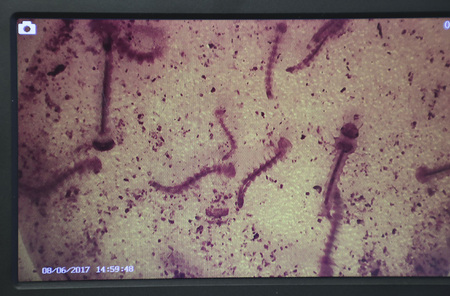
A sample of mosquito larvae swim in an observation dish under microscope in the entomology lab at Pinellas County Mosquito Control in Clearwater. The larvae are observed to identify the species, their stage of development and the efficacy of larvicides.
© Douglas R. Clifford/Tampa Bay Times via ZUMA Press Wire
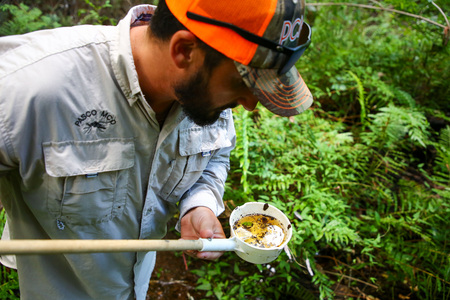
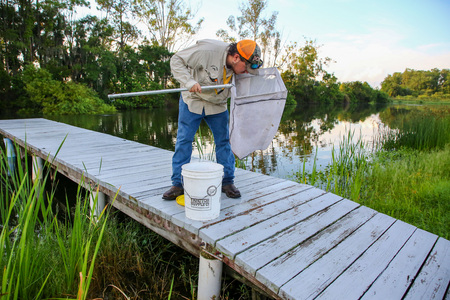
Larvicide supervisor STELIOS KALIMNIOS examines a water sample while searching for mosquito larvae at a swamp in New Port Richey, during their shifts with Pasco County Florida Mosquito Control.
© Douglas R. Clifford/Tampa Bay Times via ZUMA Press Wire
Mosquito technician KYLE RUEN collects minnows from a pond at Pasco County Mosquito Control facility in Odessa, Florida. Minnows are placed in areas containing heavy mosquito larvae to help abate the populations.
© Douglas R. Clifford/Tampa Bay Times via ZUMA Press Wire
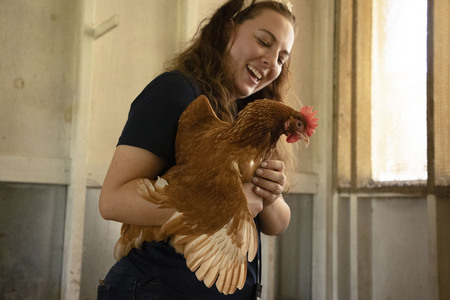
CAROLINE SCOTT, 29, an environmental specialist with Pinellas County Mosquito Control and Vegetation Management holds a Red Star hens while checking on a chicken coop at Pinellas County Mosquito Control in Clearwater. Florida Mosquito Control uses sentinel chickens as an early warning surveillance system to detect the presence and circulation of mosquito-borne viruses before they spread to humans.
© Douglas R. Clifford/Tampa Bay Times via ZUMA Press Wire
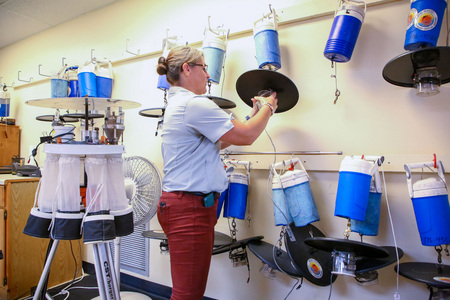
ADRIANE N. ROGERS, Executive Director of Pasco County Mosquito Control examines CDC light traps in the Entomology Lab at Pasco County Mosquito Control facility in Odessa, Florida.
© Douglas R. Clifford/Tampa Bay Times via ZUMA Press Wire
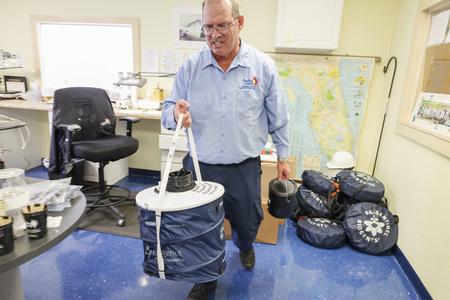
JASON STUCK, an entomologist with Pinellas County Mosquito Control, works with a BG-Sentinel 2 mosquito trap, which is capable of capturing Aedes aegypti and Aedes albopictus, two mosquito species that can transmit dengue viruses, at the mosquito control laboratory in St. Petersburg.
© Douglas R. Clifford/Tampa Bay Times via ZUMA Press Wire
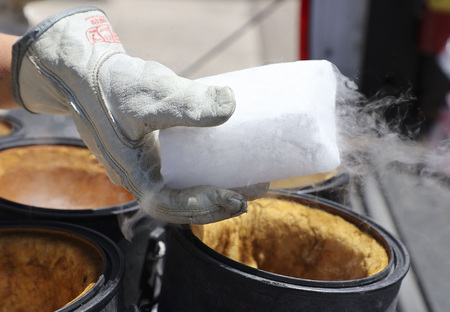
MARY BOLTON, an entomology assistant trainee, prepares chunks of dry ice for CDC mosquito traps at Pinellas County Mosquito Control in Clearwater. Dry ice is used in mosquito traps because it emits carbon dioxide (CO2) which mimics human and animal breath, the primary attractant for mosquitoes, that tells them a potential blood meal is nearby.
© Douglas R. Clifford/Tampa Bay Times via ZUMA Press Wire
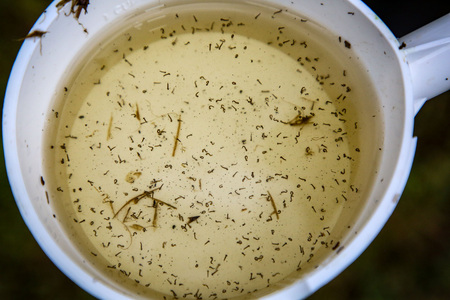
A sampling container is full of wrigglers, a population of early-stage mosquito larvae, from a retention pond at Green Key Beach in New Port Richey, Florida.
© Douglas R. Clifford/Tampa Bay Times via ZUMA Press Wire
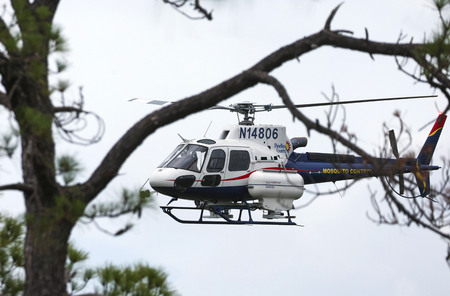
A Pinellas County Mosquito Control helicopter flies low over coastal wetlands near Crystal Beach and Seaside Point in northern Pinellas County. The helicopter was applying granular larvicide to marshes and other mosquito breeding habitats as part of the county's integrated mosquito management program, which targets mosquito larvae before they mature into biting adults.
© Douglas R. Clifford/Tampa Bay Times via ZUMA Press Wire
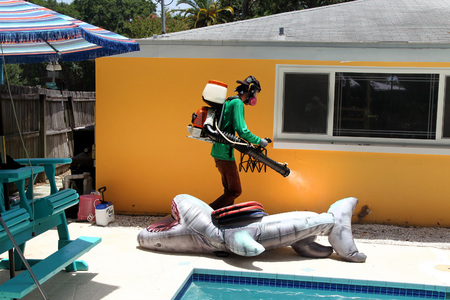
ZACH MARKS, of Seminole, uses a mister-blower to distribute a cocktail of insecticides at a Dunedin property while abating mosquitoes with Mosquito Joe of Tampa Bay in Dunedin.
© Douglas R. Clifford/Tampa Bay Times via ZUMA Press Wire